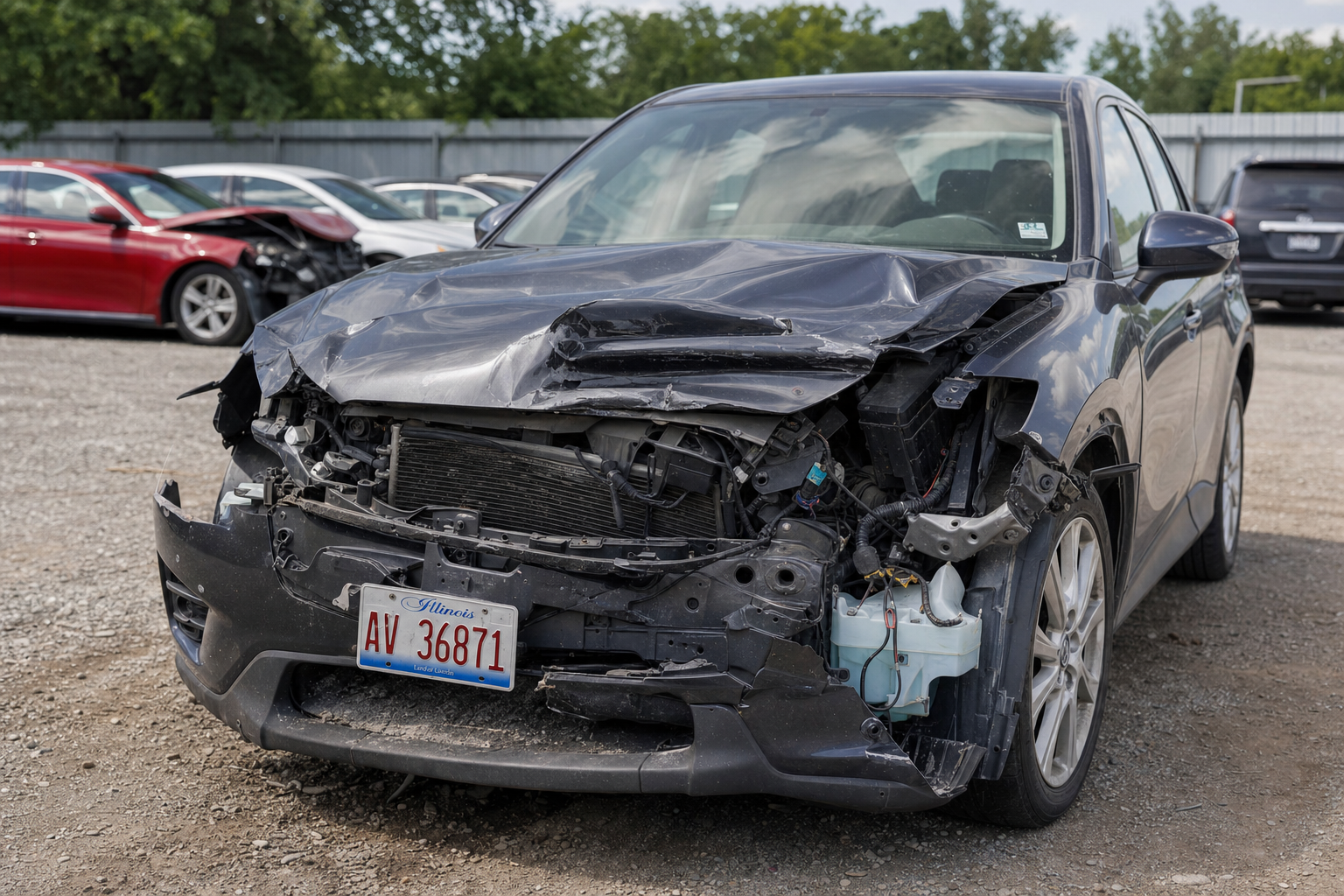
When your vehicle is declared a total loss after an accident, your insurance payout hinges on one critical figure: the vehicle’s actual cash value (ACV). For many policyholders, that value is determined by a system called CCC One Total Loss Valuation—a tool widely used by insurance companies to estimate total loss settlements. CCC One is considered an industry standard in the insurance industry and is utilized by 18 of the top 20 insurance companies.
Many insurance companies prefer CCC Information Services for vehicle valuations because it saves them money on claims. The CCC Intelligent Solutions software is commonly used by insurers in the insurance industry to determine total loss payouts. But what exactly is CCC One, how does it calculate value, and why do so many drivers feel shortchanged?
In this article, we’ll break down what CCC One total loss valuation is, how it works, and the common challenges consumers face. We’ll also explain what you can do if you receive an undervalued offer based on a CCC total loss valuation—and how Auto Claim Consultants can help you fight back and maximize your settlement.
Want to Maximize Your CCC Total Loss Valuation Amount?
What Is CCC One Total Loss Valuation?
CCC One is a software platform developed by CCC Information Services Inc., a major technology provider in the automotive and insurance industries. Among its many services, CCC offers a total loss valuation tool that insurance companies use to determine the pre-accident value of vehicles deemed a total loss. The CCC One system calculates a base value for the replacement vehicle by averaging adjusted prices of comparable vehicles, reflecting what it would cost to replace your car in the current market.
TThis CCC valuation total loss report is supposed to reflect the fair market value of your car based on several key factors, including:
- Comparable vehicles for sale in your area
- Mileage and condition of your car
- Location and market trends
- Optional equipment and trim level
- Base value (the initial estimated worth of your vehicle)
- Adjusted value (the base value modified for specific details such as mileage, trim, options, and condition)
Valuations are adjusted based on differences in mileage, trim, options, and condition. CCC One uses artificial intelligence to analyze damage photos and predict total losses, utilizing an algorithmic approach instead of manual human appraisal. The CCC report includes a summary section that reflects the final dollar value assigned to the vehicle, and the vehicle owner’s information appears in the report’s header section.
Insurance adjusters rely heavily on the CCC system to generate a market valuation report, which then becomes the basis for your total loss offer.
How CCC Total Loss Valuation Works
When a car is declared a total loss, the insurance company inputs details about the vehicle into the CCC system. The software then identifies a set of comparable vehicles—often referred to as “comps”—and makes adjustments for differences in mileage, condition, features, and other factors. The CCC report uses recent dealer advertised prices for comparable vehicles to determine a base value.
Within the report, there are specific line items for condition, mileage adjustments, and other factors, which can vary based on the vehicle’s year, make, model, and location. Mileage adjustments and option adjustments are applied to reflect these differences accurately.
From this, the CCC One system calculates an adjusted vehicle value and subtracts things like your deductible or salvage value (if applicable), to arrive at the payout. The actual cost to purchase a comparable vehicle, including related costs such as sales tax, is a key consideration in the valuation process, and the cost should reflect what is required to replace your vehicle in the current market.
But here’s the catch—CCC’s methodology is proprietary and not open to public scrutiny. That lack of transparency is where many problems begin.
Despite its widespread use, CCC’s valuation is often presented as the final word on vehicle values in total loss claims, but its position in the claims process can and should be challenged. The CCC total loss system is frequently criticized by consumers, attorneys, and valuation experts.
Many consumers find that the CCC report does not accurately reflect the true market value of their vehicle, leading to disputes over the final dollars paid out. The position of the CCC valuation in the claims process can significantly impact how much money the vehicle owner ultimately receives. Here are some of the biggest issues claimants face:
1. Lack of Transparency
CCC does not disclose the exact formula or algorithms used to determine a vehicle’s value. This makes it difficult for policyholders—and even independent appraisers—to verify whether the valuation is fair or accurate. Without transparency, insurers have an upper hand in defending low offers.
2. Incomplete or Insufficient Market Data
While CCC claims to pull from a large database of local sales and listings, its dataset may not accurately reflect your local market. Florida law requires that the settlement amount for a total loss claim must be based on the actual cost to purchase a comparable vehicle. To comply with this, insurers must use generally recognized motor vehicle industry sources to determine the retail cost of a comparable vehicle. The retail cost should be based on data from a generally recognized motor vehicle industry source, such as JD Power or NADA, rather than relying solely on insurance industry-specific resources like CCCOne. CCC’s data may miss private sales, recent price spikes, or region-specific vehicle demand, which can lead to undervalued estimates, especially in fluctuating or niche markets.
3. Inaccurate Condition Adjustments
The CCC total loss valuation system makes condition adjustments that may not match your car’s true condition before the accident. In the CCC report, the adjusted value reflects modifications made to the base value based on factors like condition, mileage, and comparable market listings. However, these adjustments can be inconsistent and may not fully account for recent upgrades and maintenance that improve value.
For example, if you replaced your tires or upgraded your stereo system, those improvements may not be properly factored in, leading to a lower offer than what your vehicle is actually worth. Independent appraisers can help negotiate total loss claims and may provide more accurate valuations than CCC reports.
4. Limited Dispute Process
Disagreeing with a CCC valuation isn’t easy. Most insurers won’t walk you through their methodology or give detailed responses to your concerns. Insurance adjusters may be trained to stick with the CCC valuation number, making it difficult to negotiate a higher payout. The dispute process is often frustrating, with minimal guidance and slow communication, putting claimants at a disadvantage. Invoking the appraisal clause in your insurance policy can help resolve disputes over the CCC valuation, as it allows you to hire an independent appraiser to aid in negotiations or dispute resolution.
Why CCC Valuations Often Lead to Low Payouts
Because CCC is contracted by insurance companies, there is a perceived conflict of interest. The use of CCC valuations is a common business practice in the insurance industry, as insurers rely on these tools to determine claim settlements. The lower the valuation, the less the insurer has to pay out. While CCC maintains that its system is objective, many consumers find that CCC total loss valuations result in offers that are well below what they’d expect based on dealer listings or retail prices in their area.
Critics argue that CCC One often generates lower valuations compared to industry standards like NADA or Kelly Blue Book, and many independent appraisers believe CCC ONE generates lower-than-market valuations to protect insurers’ profits. Additionally, class action lawsuits have been filed against insurers and CCC for improper valuation methods, resulting in significant settlements.
It’s not uncommon for CCC to include vehicles that are not truly comparable, are located far from your zip code, or have unclear mileage or damage histories. Adjustments are sometimes made arbitrarily, reducing the total payout unfairly. When reviewing your settlement, be aware that fees, tax, and sales tax may be excluded from the payout, which can significantly impact the final amount you receive.
What to Do If You Receive an Undervalued CCC Valuation
If your insurer presents you with a CCC total loss settlement offer that seems low, don’t feel pressured to accept it right away. To effectively challenge the valuation, you need access to the full CCC report, as this information is essential for understanding how your vehicle’s value was determined and for negotiating for higher settlements.
Consumers often use the CCC report to negotiate for higher settlements with their insurance company. While the CCC ONE market valuation report is often presented as the final word on your vehicle’s worth, it can be challenged through research and by requesting additional information or clarification from your insurer. Here are the steps you should take:
When gathering comparables, remember that challenging a CCC valuation report requires research and gathering evidence of comparable vehicles and their actual sale prices from sources like Kelley Blue Book, Autotrader, and other automotive marketplaces. This research is crucial to support your claim if you believe your vehicle has been undervalued.
1. Request a Copy of the CCC Report
Ask your adjuster for the full CCC One market valuation report—you have the right to access and request proof of the CCC valuation numbers. This will show the comparable vehicles used, adjustments made, and the final value assigned to your vehicle.
2. Review the Report for Errors
Check for:
- Incorrect vehicle details (model, trim, mileage, features)
- Inaccurate comps (damaged cars, out-of-area listings)
- Unjustified deductions or adjustments
- Errors in individual line items—review each line in the report for accuracy, including condition, mileage, and any adjustments
3. Gather Your Own Comparables
Conducting your own research is essential to gather accurate comparables and support your claim. Look up listings of similar vehicles (same year, make, model, trim, mileage) in your local area from sites like Autotrader, Cars.com, and Kelley Blue Book. Use this research to support your claim that the CCC value is too low.
4. Contact an Independent Appraiser
Getting an independent vehicle appraisal can help build a stronger case if you plan to dispute the CCC valuation.
5. Reach Out to a Total Loss Expert
Working with a third-party specialist—like Auto Claim Consultants—can dramatically improve your chances of receiving a fair settlement. We know how to challenge flawed CCC valuations and have helped countless clients get thousands more than their insurer’s initial offer.
How Auto Claim Consultants Can Help
At Auto Claim Consultants, we specialize in reviewing CCC One total loss valuation reports and identifying common issues that can result in unfair settlements—such as inaccurate comparables, incorrect condition adjustments, and undervalued market data. Our team brings deep expertise in total loss claims and works directly with clients to analyze valuation reports, gather stronger evidence, and challenge low offers from insurance companies. By handling the documentation, communication, and negotiation process, we take the burden off your shoulders and help ensure you receive the maximum payout your vehicle is truly worth.
Don’t Settle for Less Than You Deserve. Contact Auto Claim Consultants Today to Maximize Your Payout
Receiving a CCC total loss valuation that feels unfair? You’re not alone—and you don’t have to accept it.
CCC One total loss valuations are often flawed, underreported, and difficult to dispute without expert help. But with the right knowledge and advocacy, you can fight back and secure the compensation you rightfully deserve.
Upload your CCC report and your insurer’s appraisal—we’ll review it within 24-48 hours and let you know how we can help. Contact Auto Claim Consultants to maximize your total loss settlement now.
FAQs
Get a Complimentary Claim Review Today!
Please fill out the required information and attach the insurance carrier’s appraisal. We will review it within 24-48 hours and let you know how we can help.