TL;DR
- Farmers Insurance total loss settlements are based on your vehicle's actual cash value (ACV) before the accident — not your loan balance or the cost of a new vehicle.
- There is no single Farmers Insurance total loss percentage — the threshold depends on state law, repair costs, salvage value, and policy terms.
- Farmers offers optional gap and Residual Debt Coverage that may cover the difference between your settlement and your outstanding loan balance.
- Farmers Insurance claims: 1-800-435-7764.
A serious accident can leave you with questions about whether your vehicle will be repaired, how its value will be calculated, and when you can expect payment. The Farmers Insurance total loss process generally begins with an inspection and valuation to determine whether repairing the vehicle is economically practical or legally permissible. If the vehicle is declared a total loss, Farmers typically bases the settlement on the vehicle's actual cash value (ACV) immediately before the covered loss, subject to your policy terms, deductible, applicable state requirements, and any lienholder interest.
This guide explains how Farmers evaluates a total loss, what affects the settlement amount, what happens when a loan or lease is involved, and how to review the valuation if you disagree with it. It also explains when an independent appraisal may help. Because policies and total loss laws vary by state, your policy documents and the requirements in the state where the claim is handled will ultimately control the process. You can review your state's specific rules on our state-by-state total loss resource pages.
What Does Farmers Insurance Consider a Total Loss?
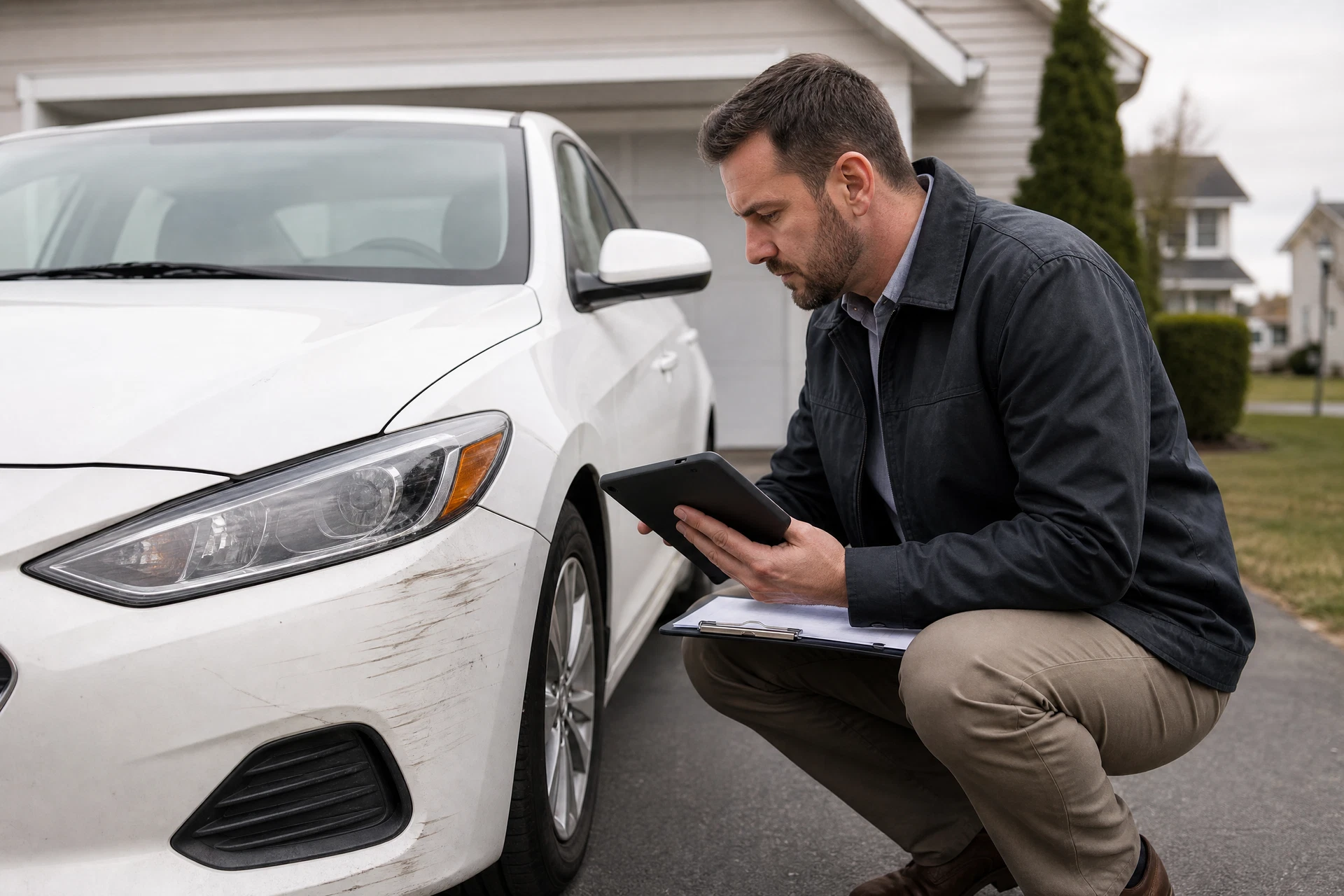
A vehicle is generally considered a total loss when the estimated cost of repairing it reaches or exceeds a certain portion of its actual cash value. A vehicle may also be totaled when state law requires that classification or when the damage cannot be repaired safely. Farmers states that it follows the applicable policy contract and state guidelines when evaluating whether a vehicle qualifies as a total loss.
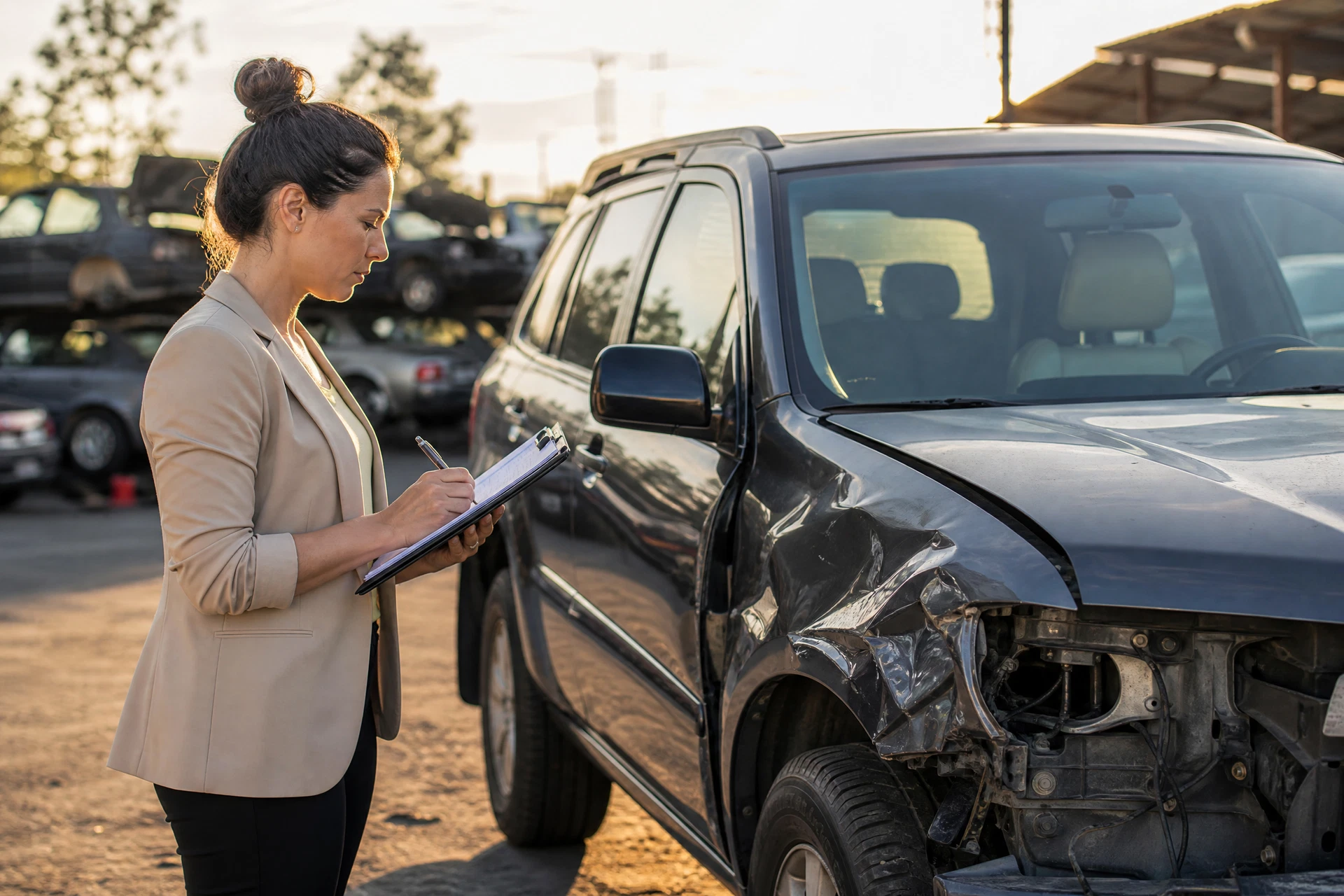
A total loss does not necessarily mean that the vehicle is completely destroyed. A car may still start, move, or appear repairable while being considered a total loss because the combined cost of parts, labor, supplemental damage, and related expenses is too high compared with the vehicle's pre-loss value.
Factors that may affect the total loss decision include:
- The vehicle's actual cash value before the accident
- The initial repair estimate
- Additional damage discovered during inspection or disassembly
- Parts and labor costs in the local market
- Expected salvage value
- Applicable state total loss laws
- Whether the vehicle can be returned to a safe and roadworthy condition
What Is the Farmers Insurance Total Loss Percentage?
There is not one universal Farmers Insurance total loss percentage that applies to every claim nationwide. The relevant threshold may depend on the law of the state handling the claim, Farmers' evaluation procedures, the estimated repair cost, the vehicle's salvage value, and the terms of the applicable policy.
Some states use a fixed percentage of actual cash value. Others use a total loss formula that compares the cost of repairs plus the vehicle's projected salvage value with its pre-loss value. In some situations, a vehicle may be declared a total loss even before a numerical threshold is reached if it cannot be repaired safely or if state law requires a salvage classification based on the nature of the damage.
For example, a simplified percentage calculation may look like this:
Estimated repair cost ÷ actual cash value × 100 = repair-cost percentage
If a vehicle has an actual cash value of $20,000 and estimated repairs of $15,000, the repair-cost percentage would be 75%. That figure alone does not confirm whether Farmers will total the vehicle because the applicable state rule and other claim-specific expenses must also be considered. Policyholders should ask the claims representative which state standard or total loss formula was applied.
How Does Farmers Insurance Calculate a Total Loss Payout?
A standard total loss settlement is generally based on the vehicle's actual cash value (ACV). Actual cash value is intended to represent the vehicle's market value immediately before the covered accident or loss — not the price originally paid for the vehicle and not necessarily the amount needed to purchase a brand-new replacement.
Farmers explains that its vehicle valuation considers factors such as year, make and model, factory and qualifying vehicle options, mileage, pre-loss condition, and comparable vehicles in the local market. Farmers also states that it compares the damaged vehicle with similar vehicles in the local market using an independent source, then adjusts the value for relevant differences.
A simplified Farmers Insurance total loss calculation may be expressed as:
Estimated Net Settlement = Actual Cash Value + Applicable Taxes and Fees − Deductible − Salvage Value (if the owner keeps the vehicle)
The exact calculation depends on whether the claim is being paid under your own collision or comprehensive coverage, another driver's liability coverage, or a different policy provision. Taxes, title fees, registration costs, deductibles, and other adjustments can also vary by state and claim type. Insurers commonly use third-party valuation tools such as CCC One or Mitchell to generate these reports.
Factors That Can Affect Your Farmers Insurance Total Loss Payout
Two vehicles with the same year and model can receive different valuations. The condition, equipment, mileage, and local market evidence for each vehicle may be different.
Vehicle Mileage
Mileage is an important value factor. A vehicle with substantially fewer miles than similar vehicles may receive an upward adjustment, while above-average mileage may result in a downward adjustment.
Trim Level and Installed Options
The valuation should reflect the correct trim, drivetrain, engine, body configuration, and applicable equipment. Missing features or an incorrect trim designation can affect the comparability of the vehicles used in the report. Relevant features may include four-wheel drive or all-wheel drive, premium safety or driver-assistance packages, upgraded interior materials, factory navigation or technology packages, premium audio equipment, towing or performance packages, and manufacturer-installed appearance upgrades. Not every aftermarket item adds its full purchase price to the vehicle's market value, but qualifying equipment should still be accurately documented and reviewed.
Pre-Accident Vehicle Condition
The valuation may include condition adjustments for the interior, exterior, tires, mechanical components, or prior damage. Review these adjustments carefully, particularly when the report describes parts of the vehicle as below average. Routine maintenance generally helps preserve a vehicle's condition but does not always add value dollar for dollar. Recent major work — such as a replacement engine, transmission, hybrid battery, or high-value vehicle-specific restoration — may still be relevant to the evaluation when supported by receipts and market evidence.
Local Comparable Vehicles
Farmers states that similar vehicles in the local market are used in the valuation process. The usefulness of those comparables depends on how closely they match your vehicle in trim, mileage, equipment, condition, and geographic market. A comparable vehicle may deserve closer review when it has a different trim or body style, uses a different engine or drivetrain, has substantially higher mileage, is located far outside the relevant market, has fewer options, or reflects a fleet, rental, branded-title, or otherwise dissimilar vehicle.
Deductible
When a total loss is paid through your own collision or comprehensive coverage, the applicable deductible is generally subtracted from the settlement. Your declarations page identifies the deductible associated with each coverage.
Taxes and Required Fees
Depending on state law and the type of claim, the settlement may include certain sales taxes, title fees, registration charges, or other costs. Ask for an itemized settlement statement so you can see exactly which amounts were added or deducted.
Prior Damage and Vehicle History
Unrepaired prior damage can reduce the valuation when it affected the vehicle's condition immediately before the accident. A branded title or significant documented history may also influence market value. Any prior-damage deduction should identify the condition involved and explain how the amount was calculated.
What Happens After Farmers Declares Your Vehicle a Total Loss?
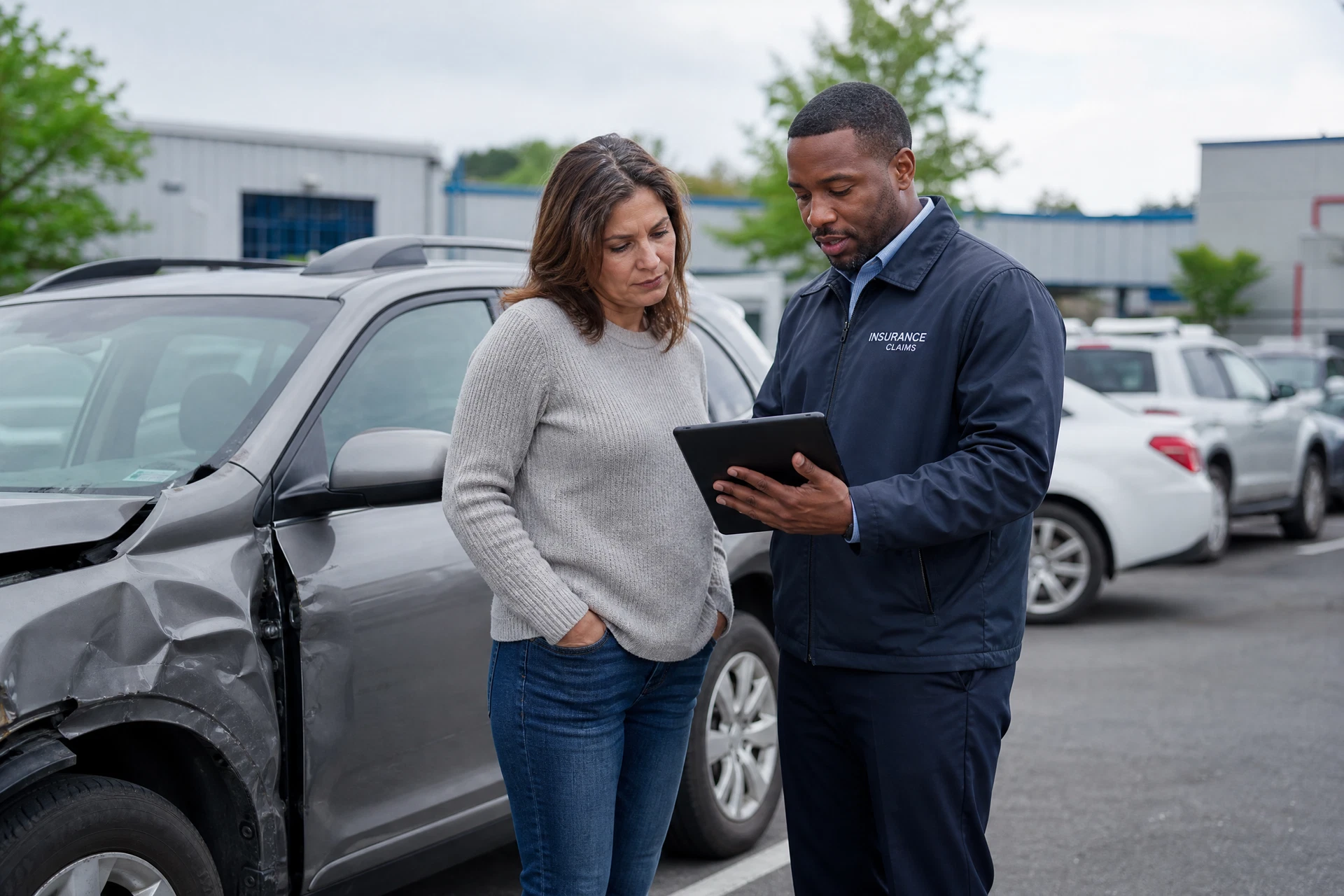
After inspecting the vehicle, Farmers typically contacts the policyholder to review the evaluation and discuss the total loss process. If the owner does not plan to retain the vehicle, Farmers may arrange for it to be moved to a secure facility while the settlement is completed. You may be asked to:
- Review the vehicle valuation report
- Remove personal property from the vehicle
- Gather all available keys
- Locate the title, if you hold it
- Provide lender or lessor information
- Remove personal data from navigation, phone, and infotainment systems
- Sign and return any required title or settlement documents
- Coordinate release of the vehicle to the salvage vendor
Promptly completing the paperwork can help avoid preventable payment delays. Farmers notes that payment may depend on receiving the required documents, securing the vehicle when it is not being retained, receiving additional keys, and obtaining payoff paperwork from a lender.
What Happens If You Have a Vehicle Loan?
When a lender has a legal interest in the vehicle, the financial institution generally has the right to receive payment before funds are issued to the vehicle owner. Farmers advises policyholders to continue making scheduled loan payments until the loan balance has been cleared. Farmers generally obtains a payoff amount from the lender and applies the settlement toward the outstanding balance. The possible outcomes include:
- The settlement exceeds the loan payoff: The lender is paid first, and any remaining amount may be issued to the policyholder.
- The settlement equals the payoff: The settlement may satisfy the loan without a remaining payment to the policyholder.
- The settlement is less than the payoff: The borrower may remain responsible for the deficiency unless gap or residual debt coverage applies.
The amount owed on the loan does not usually determine the vehicle's actual cash value. A large loan balance may result from negative equity, financing terms, interest, warranties, or balances carried over from a prior vehicle.

Gap Insurance and Farmers Residual Debt Coverage
Gap-related coverage is designed to address part or all of the difference between a total loss settlement and an outstanding loan or lease balance, subject to the terms and limits of the coverage. Farmers explains that optional gap insurance may pay the difference between the settlement and the amount owed on the financed vehicle. Without applicable gap coverage, the borrower may remain responsible for the unpaid balance.
Farmers also describes a Residual Debt Coverage option that may pay up to 25% above the vehicle's actual cash value when the ACV is lower than the remaining auto loan balance. Availability and terms vary, so policyholders should review their declarations page and endorsements rather than assuming this protection is included automatically. Gap or residual debt coverage generally does not increase the vehicle's ACV — it is a separate coverage intended to address qualifying debt remaining after the underlying total loss settlement.
How Farmers Handles a Leased Vehicle
For a leased vehicle, Farmers generally contacts the lessor to confirm the payoff and obtain the required documentation. Once the paperwork is received and the vehicle is secured, payment can be issued according to the lease and claim requirements. Farmers notes that some leasing institutions may allow a residual settlement amount to be paid to the lessee when the settlement exceeds the amount owed, but the lease agreement controls how those funds are handled. Contact the leasing company early in the process to ask about the current payoff amount, title-processing requirements, whether the lease includes gap protection, how excess settlement funds are handled, and whether additional lease-end charges may apply.
Can You Keep a Vehicle Farmers Declares a Total Loss?
You may be able to retain the totaled vehicle, depending on state law, the presence of a loan, and the insurer's salvage procedures. When owner retention is permitted, Farmers generally deducts the vehicle's salvage value from the settlement and makes any required adjustments for state taxes and fees. Keeping the vehicle may also involve obtaining a salvage or rebuilt title, completing a state safety inspection, paying for repairs personally, meeting DMV reporting requirements, accepting reduced insurance coverage options, addressing lender restrictions, and reselling a vehicle with a branded title. Before choosing owner retention, compare the reduced settlement with realistic repair expenses and the vehicle's likely post-repair value. A totaled vehicle can contain hidden damage that significantly increases the final cost of restoration.
Rental Reimbursement and Loss of Use Options
Rental coverage depends on the specific policy and endorsement. Farmers states that a claims representative can review the available limits and explain how long rental coverage continues following a total loss determination. Coverage may change once the vehicle is declared totaled, so do not assume that a rental will remain covered until you purchase another vehicle.
Farmers also offers an optional Loss of Use coverage in some policies, which may provide a flat transportation amount usable for public transit, rentals, taxis, or rideshare services while a covered vehicle is being repaired or following a total loss, until the applicable maximum is reached. Coverage availability, limits, and conditions vary. Ask your claims representative for the final covered rental date in writing to avoid unexpected charges.
Farmers Insurance Total Loss Department Phone Number
The Farmers Insurance total loss department phone number commonly used for claims assistance is 1-800-435-7764. Farmers identifies this number as its Claims Center contact for reporting a claim, checking an existing claim, or obtaining assistance from a claims representative. Claims can also be filed and tracked through Farmers' online Claims Center.
There may not be a separate nationwide phone line devoted exclusively to total losses. After the claim is opened, the assigned claims representative is typically the most direct contact for questions about the vehicle valuation, inspection status, comparable vehicles, lender or lease payoff information, title documents, salvage arrangements, rental deadlines, and settlement payment status. Have your claim number available when calling. Note that Farmers GroupSelect, Bristol West, Foremost, and Toggle may use different contact channels, even though some are affiliated with Farmers.

What to Do If You Disagree With Farmers Insurance's Total Loss Payout Amount
You do not have to assume that every disagreement means the valuation is unreasonable. Start by identifying specific facts or market evidence that may have been overlooked or entered incorrectly.
1. Request the Complete Valuation Report
Ask Farmers for the full report, including comparable vehicles, condition assessments, option adjustments, mileage calculations, and the itemized settlement.
2. Correct Factual Errors
Submit documentation for any inaccurate information, such as incorrect trim or drivetrain, missing factory equipment, wrong mileage, incorrect condition ratings, features assigned to the wrong comparable, prior damage that did not exist, or comparables that do not match the insured vehicle. Useful records may include photographs, maintenance invoices, a window sticker, build sheet, dealer service history, inspection reports, and receipts for significant recent work.
3. Research Relevant Market Evidence
Look for vehicles that closely match the same year, model, trim, drivetrain, mileage, options, and geographic market. Focus on genuinely comparable vehicles rather than selecting only the highest advertised prices. Dealer asking prices are not automatically equal to actual cash value, but well-matched listings can provide relevant evidence when reviewing the insurer's comparable selection or adjustments.
4. Submit a Documented Request for Review
Organize the discrepancies in writing. Identify each issue, explain why it matters, and attach supporting records. A focused request based on verifiable facts is generally more useful than stating only that the offer seems too low.
5. Review the Appraisal Provision in Your Policy
Some first-party auto policies include an appraisal clause for disagreements about the amount of loss. The clause may allow the policyholder and insurer to obtain separate appraisals, followed by an umpire process if the appraisers cannot agree. Appraisal provisions, deadlines, costs, and procedures vary. Read the actual policy language and ask Farmers to confirm whether an appraisal option applies to your claim. Learn more about the right to appraisal process.
6. Consider an Independent Auto Appraiser
When substantial questions remain, review whether an independent auto appraisal may assist. An appraiser can conduct an objective review of vehicle value, examine the insurer's valuation methodology, identify relevant differences among comparable vehicles, and develop a supportable valuation opinion. The purpose of an independent market-based appraisal is not to presume that the insurer's figure is wrong or to promise an increase — it is to provide a documented appraisal review using vehicle-specific facts, relevant market evidence, and recognized valuation methodology.
Independent Appraisal Support From Auto Claim Consultants
Auto Claim Consultants is an independent auto appraisal and valuation service providing total loss and diminished value evaluations nationwide. We prepare fair market value analyses based on the vehicle's configuration, condition, mileage, options, market area, comparable vehicle data, and other relevant information.
Our role is to offer an objective review of vehicle value and a supportable valuation opinion — not to guarantee a particular settlement or predetermine that a claim should increase. When appropriate, we can review a Farmers Insurance total loss valuation, identify documented discrepancies, prepare an independent market-based appraisal, and communicate valuation findings and supporting documentation for consideration during the claim process.
Contact Auto Claim Consultants Today
A total loss settlement can affect your ability to replace your vehicle, satisfy a loan, or make an informed decision about retaining the salvage. Before accepting the valuation, review the vehicle details, comparable data, adjustments, applicable coverage, and settlement deductions carefully.
Contact Auto Claim Consultants to discuss your Farmers Insurance total loss claim and review whether an independent appraisal may assist. Our team can provide independent appraisal support and a documented, market-based analysis tailored to the specific vehicle and available claim information.
Disclaimer: Auto Claim Consultants provides independent appraisal and valuation support. We do not guarantee any specific settlement amount, claim result, or increase in value. Our opinions are based on available vehicle information, market data, and appraisal methodology.
Frequently Asked Questions
Can I dispute a Farmers Insurance total loss payout?
You can request a review when you believe the valuation contains factual errors, unsupported adjustments, or unsuitable comparable vehicles. Provide organized documentation and ask Farmers to explain how the disputed amount was calculated.
How does Farmers Insurance determine a vehicle's actual cash value?
Farmers Insurance generally evaluates the vehicle's year, make, model, trim, mileage, options, condition, and local market data from before the loss. Comparable vehicles and documented adjustments may also be used to develop the valuation.
Does Farmers Insurance pay replacement cost for a totaled vehicle?
A standard total loss settlement is generally based on actual cash value rather than the cost of purchasing a brand-new replacement vehicle. Replacement cost coverage may apply only when it is specifically included in the policy or provided through an optional endorsement.
How long does a Farmers Insurance total loss claim take?
The timeline depends on the inspection, valuation review, title status, lender response, document completion, and whether the settlement is disputed. Delays can occur when payoff information, ownership documents, signatures, or vehicle access are missing.