
TL;DR
- - Colorado uses a Total Loss Formula: a vehicle is totaled when repair cost plus salvage value meets or exceeds its actual cash value (ACV).
- - Insurers pay ACV for totaled vehicles, so low offers are common and you should document pre-loss condition and collect comparable listings to support a higher value.
- - Get an independent appraisal, demand insurer repair and salvage breakdowns, and contact Auto Claim Consultants to dispute undervalued total-loss or diminished-value offers.
We Can Help With Your Claim!
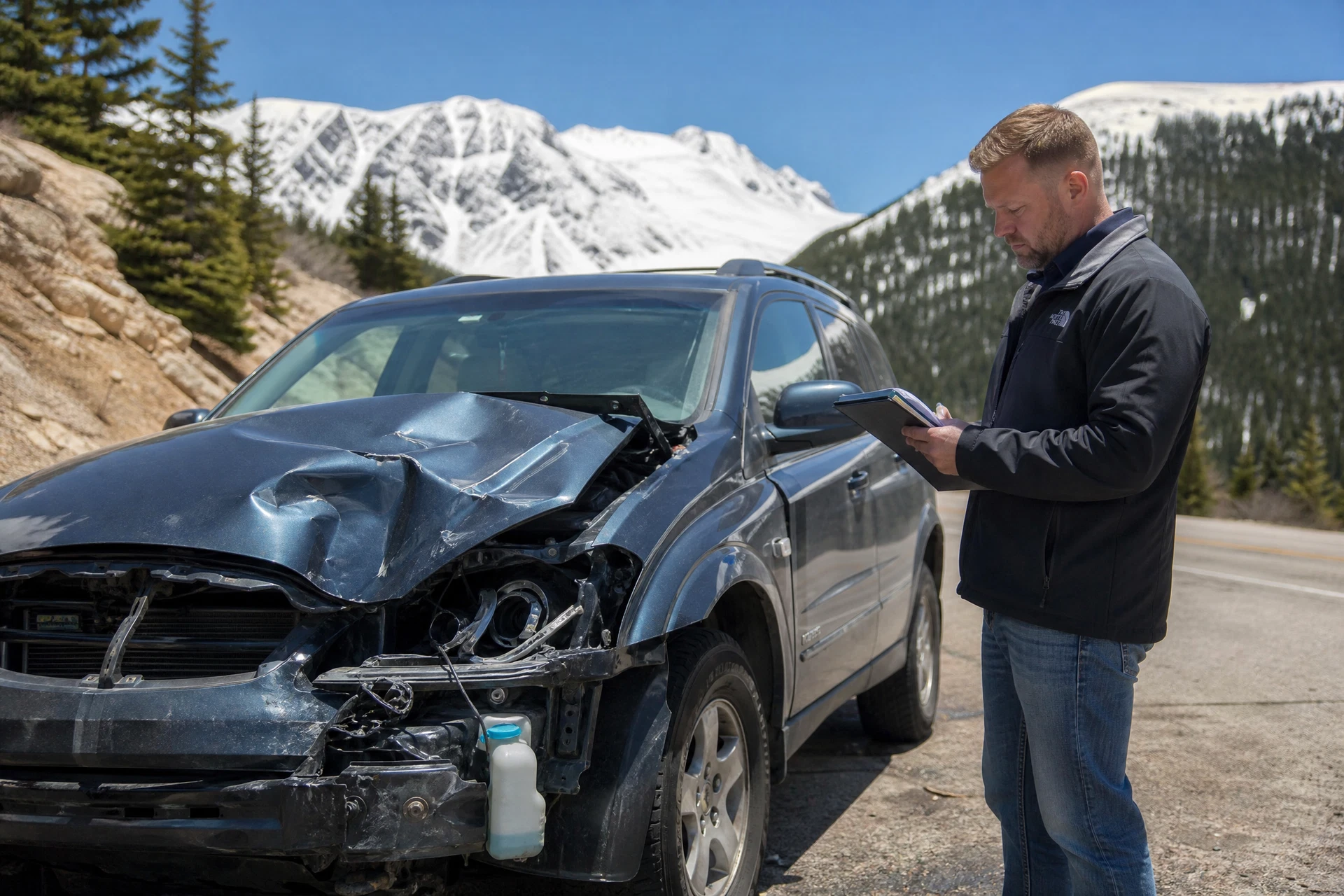
Colorado Total Loss Threshold: A Comprehensive State-Specific Guide
When a vehicle is involved in a serious accident, one of the most confusing and stressful outcomes is being told it has been “totaled.” For Colorado drivers, understanding how insurers determine a total loss—and what rights you have during the process—can make a significant difference in the financial outcome of your claim.
This guide provides a clear, state-specific breakdown of the Colorado total loss threshold, how insurance companies apply it, and what steps you should take to protect yourself after your vehicle is declared a total loss. Whether you are currently navigating a claim or preparing for the possibility, this resource is designed to give Colorado residents the clarity and confidence needed to move forward.
What Does “Total Loss” Mean in Colorado?
A vehicle is considered a total loss when the cost to repair it, combined with other factors, meets or exceeds a threshold established by state law or insurance guidelines. Once a vehicle is deemed a total loss, the insurance company will typically offer a settlement based on the vehicle’s actual cash value (ACV) rather than paying for repairs.
In Colorado, this determination is governed by a specific legal framework that differs from many other states, making it essential for residents to understand how the process works locally.
Understanding the Colorado Total Loss Threshold
Colorado uses a total loss threshold, but it is not a fixed percentage like some states. Instead, the Colorado total loss threshold is based on a Total Loss Formula (TLF).
The Total Loss Formula Explained
Under the total loss threshold Colorado insurers must apply, a vehicle is considered a total loss when:
Cost of Repairs + Salvage Value ≥ Actual Cash Value (ACV)
If the combined repair cost and salvage value meet or exceed the vehicle’s pre-accident value, the insurer is legally allowed to declare the vehicle a total loss.
This formula gives insurance companies a degree of flexibility, which can sometimes work against vehicle owners if valuations are not accurate.

How Insurance Companies Calculate Actual Cash Value (ACV)
Actual Cash Value represents what your vehicle was worth just before the accident occurred. Insurance companies typically determine ACV using:
- Comparable vehicle listings in the regional market
- Vehicle age, mileage, and condition
- Trim level, options, and aftermarket features
- Depreciation adjustments
In practice, many ACV reports contain inaccuracies—such as missing features, poor-quality comparable vehicles, or excessive depreciation—which can reduce your settlement under the Colorado total loss threshold.
Common Problems Colorado Drivers Face After a Total Loss
Colorado vehicle owners frequently encounter issues that result in lower payouts, including:
- Use of out-of-area or inferior comparable vehicles
- Failure to include optional packages or upgrades
- Incorrect mileage or condition ratings
- Inflated salvage values that push vehicles into total loss status
These problems are especially impactful in Colorado because the total loss formula leaves room for interpretation and negotiation.
Your Rights Under Colorado Total Loss Laws
Colorado law provides important consumer protections during the total loss process.
What You Are Entitled To
- You may request and review the valuation report used to determine ACV.
- You have the right to dispute errors or unsupported adjustments.
- You are not required to accept the insurer’s first settlement offer.
- In many cases, applicable taxes and fees may be included in your settlement.
Knowing these rights allows you to engage with insurers from a position of confidence rather than urgency.
What Happens After Your Vehicle Is Declared a Total Loss in Colorado?
Once a total loss is declared, the process generally includes:
- Presentation of a settlement offer
- Resolution of any outstanding lien
- Transfer of ownership to the insurer (unless you retain salvage)
- Final payment issuance
This stage is where many Colorado drivers unknowingly leave money on the table by accepting undervalued offers without review or negotiation.
How Auto Claim Consultants Helps Colorado Vehicle Owners

At Auto Claim Consultants, we specialize exclusively in total loss and diminished value claims, representing vehicle owners—not insurance companies. We help Colorado drivers navigate the complexities of the Colorado total loss threshold by ensuring that vehicle valuations are accurate, complete, and supported by real market data.
Our services include independent vehicle valuations, detailed reviews of insurer ACV reports, identification of missing features or inaccurate comparable vehicles, and direct negotiation with insurance companies. Our goal is simple: to help you attain the highest possible payout for your vehicle.
Contact Auto Claim Consultants Today to Maximize Your Total Loss Claim
Before accepting a settlement, have your claim reviewed by professionals who understand total loss valuations and negotiation strategies. If you are a Colorado resident dealing with a total loss or diminished value claim, contact Auto Claim Consultants today for a free consultation. We are here to help you maximize your payout and ensure your settlement reflects the true value of your vehicle.
FAQs
Can I dispute a total loss settlement in Colorado?
Yes, Colorado drivers have the right to dispute a total loss settlement if the valuation is inaccurate or incomplete. You may challenge comparable vehicles, missing options, mileage adjustments, or depreciation calculations used by the insurer.
What happens if my car is repaired instead of totaled?
If your vehicle is repaired, you may still be eligible for a diminished value claim. Colorado allows diminished value claims in third-party cases when a vehicle loses market value after an accident.
How long does a total loss claim take in Colorado?
The timeline varies depending on valuation disputes, lienholders, and insurer responsiveness. Claims typically take several weeks, but disputes can extend the process if valuations are challenged.
How can Auto Claim Consultants help with a Colorado total loss claim?
Auto Claim Consultants specializes in total loss and diminished value claims and represents Colorado vehicle owners throughout the settlement process. We review valuations, dispute inaccuracies, and negotiate with insurers to help maximize your payout.